4.2 / 5 — Editorial Score
| Label | Value |
|---|---|
| Product Name | Flexigenics |
| Formula Type | Capsule — daily oral supplement |
| Purpose | Support healthy joints, reduce calcium build-up, improve mobility and flexibility |
| Key Benefits |
|
| How to Use | Take as directed daily, preferably with a meal and water |
| Side Effects | Generally mild; some users note minor digestive sensitivity early on |
| Price | 1 Bottle: $69 (+ shipping) 3 Bottles: $59/bottle (free shipping + 2 bonuses) 6 Bottles: $49/bottle (free shipping + 2 bonuses) |
| Guarantee | 60-Day Money-Back Guarantee |
| Availability | Official website only |
| Official Site | ✅ Visit Official Site → |
Table of Contents
- Introduction
- What Is Flexigenics?
- The Problem It Targets
- How Does It Work?
- Key Ingredients
- Benefits
- Is Flexigenics a Scam or Legit?
- Who Should Use It?
- Side Effects & Safety
- How to Use — Step by Step
- How Long to See Results?
- Customer Reviews & Complaints
- Pricing & Packages
- Where to Buy
- Pros & Cons
- Frequently Asked Questions
- Final Verdict
Introduction: When Joint Pain Becomes the Background Noise of Your Life
You wake up and your knees feel stiff before you even swing your legs out of bed. The morning walk to the kitchen feels like a negotiation with your own body. Getting up from a chair is something you now plan, rather than something you simply do. For millions of adults dealing with chronic joint discomfort, this isn’t occasional inconvenience — it’s the daily reality of inflamed, worn, or calcium-crystallized joints that never quite get the rest they need.
Flexigenics is a natural joint health supplement that claims to address this problem from a different angle — targeting not just inflammation, but the calcium build-up around joints that often underlies chronic stiffness and restricted movement. This Flexigenics review takes a thorough, evidence-grounded look at whether the seven-ingredient formula lives up to those claims.
This review is written for adults dealing with joint stiffness, reduced mobility, or chronic discomfort who want a complete, honest assessment of Flexigenics before purchasing. We examine every ingredient, the science behind the formula’s core concept, realistic expectations, and what the pricing actually looks like in practice.
What Is Flexigenics?
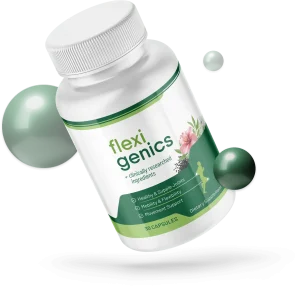
Flexigenics is a daily oral supplement designed to support joint health, restore flexibility, and improve ease of movement in adults dealing with joint discomfort. The formula combines seven active ingredients — Vitamin K, Green Tea Extract, Black Cumin, Hibiscus Sabdariffa, Micronized Palmitoylethanolamide (PEA), Quercetin, and Luteolin — each chosen for its contribution to anti-inflammatory, antioxidant, or structural joint support activity.
The supplement is sold through BuyGoods and distributed with an iron-clad 60-day money-back guarantee. Manufacturing takes place in an FDA-compliant, GMP-certified facility, ensuring consistent quality control and accurate ingredient labeling across every batch. The formula is described as 100% natural, non-GMO, and free from stimulants and synthetic additives.
Flexigenics comes in capsule form, making it straightforward to incorporate into a daily routine. The brand reports over 11,500 verified customer reviews, which gives it a substantial feedback base to draw credibility from. The 3-bottle and 6-bottle packages come with two digital bonus guides focused on joint mobility exercises and Tibetan wellness practices — additions that show the brand is positioning this as a lifestyle companion, not just a quick-fix pill.
To be clear, Flexigenics is a dietary supplement — not a prescription anti-inflammatory or a pharmaceutical NSAID replacement. Its value lies in the cumulative, gentle support it provides through consistent daily use, not in rapid pharmaceutical-speed pain relief.
The Problem Flexigenics Targets: Calcium Build-Up and Chronic Joint Inflammation
Most people assume joint pain comes exclusively from cartilage wear or arthritis, and treat it accordingly — with painkillers, anti-inflammatories, or ice packs. However, one of the most underappreciated drivers of chronic joint discomfort is the abnormal accumulation of calcium crystals in and around joint tissue. These calcium deposits, which can occur in tendons, bursae, and cartilage, create friction, trigger inflammatory responses, and significantly restrict range of motion.
Conventional pain relief options address symptoms without touching this underlying cause. NSAIDs reduce inflammation temporarily, but they don’t dissolve calcium deposits or nourish the structural components of the joint. Long-term NSAID use also carries well-documented risks — GI bleeding, cardiovascular strain, and kidney stress — making them an imperfect long-term solution.
Flexigenics takes a fundamentally different approach by combining ingredients that address calcium dysregulation, inflammation pathways, and joint tissue nourishment simultaneously. Vitamin K, for example, plays a direct role in guiding calcium away from soft tissues — a mechanism with real biochemical backing. That dual approach to both the root cause and the inflammatory consequences is what makes the Flexigenics formula structurally more comprehensive than a single-ingredient joint supplement.
How Does Flexigenics Work?
Flexigenics works through three overlapping biological pathways. First, it targets calcium regulation. Vitamin K2 — the most biologically active form of Vitamin K — activates a protein called Matrix Gla Protein (MGP), which helps prevent calcium from depositing in soft tissues like tendons and cartilage. By keeping calcium where it belongs (bones) and away from where it causes damage (joints and soft tissue), this mechanism directly addresses a root driver of stiffness.
Second, the formula delivers multi-layered anti-inflammatory support. Micronized PEA, Quercetin, and Luteolin each inhibit different arms of the inflammatory cascade — reducing the cytokines, enzymes, and oxidative signals that sustain chronic joint inflammation. The “micronized” form of PEA is particularly important here: smaller particle size dramatically improves absorption compared to standard PEA, making the anti-inflammatory effect more bioavailable.
Third, the antioxidant ingredients — Green Tea Extract, Black Cumin, Hibiscus Sabdariffa, and Quercetin — protect joint tissue from the oxidative damage that accelerates cartilage breakdown. Each pathway complements the others. In other words, Flexigenics doesn’t just quiet pain signals — it works to address why those signals are being generated in the first place, while simultaneously protecting the tissue from further damage.
Key Ingredients in Flexigenics
Here’s a detailed breakdown of every ingredient in the Flexigenics formula — what each one does, how it works in the body, and why it belongs in a joint health supplement.
Vitamin K
Vitamin K, particularly in its K2 form, is one of the most underappreciated nutrients for joint health. It activates Matrix Gla Protein (MGP) — the body’s primary defense against soft tissue calcification. When MGP is properly activated by Vitamin K, it binds to calcium ions and prevents them from depositing in tendons, cartilage, and the synovial lining of joints. Without adequate Vitamin K, calcium accumulates in places it shouldn’t, leading to the stiffness and grinding discomfort that makes movement painful.
Furthermore, Vitamin K plays a role in bone metabolism through the activation of osteocalcin, a protein that anchors calcium into bone matrix where it belongs. This dual mechanism — drawing calcium toward bone and away from soft tissue — makes Vitamin K uniquely relevant for joint health rather than just cardiovascular or bone density purposes. Its inclusion as a foundational ingredient in Flexigenics reflects an understanding of joint physiology that goes beyond the usual glucosamine-and-chondroitin approach.
Micronized Palmitoylethanolamide (PEA)
PEA is a naturally occurring fatty acid amide produced by the body in response to cellular stress and pain signals. As an endogenous compound, it works through the endocannabinoid system and PPAR-alpha receptors to modulate inflammation and pain perception — without the psychoactive effects or legal concerns associated with cannabinoids. The “micronized” form used in Flexigenics is particularly significant: the particle size reduction dramatically improves absorption in the gut, making the ingredient substantially more bioavailable than standard PEA.
In clinical research, micronized PEA has shown meaningful pain-reducing effects in patients with chronic musculoskeletal conditions, including osteoarthritis and sciatic nerve pain. It works not just by suppressing pain signals, but by reducing the underlying mast cell activation and neuroinflammation that perpetuate chronic pain cycles. For someone dealing with persistent joint discomfort that hasn’t responded well to conventional approaches, PEA represents one of the most scientifically substantive ingredients in the entire Flexigenics formula.
Quercetin
Quercetin is a plant flavonoid with one of the broadest and most studied anti-inflammatory and antioxidant profiles of any natural compound. In joint health specifically, it works by inhibiting two key enzymes — COX-2 and 5-LOX — that drive the production of prostaglandins and leukotrienes. These are the inflammatory mediators responsible for the swelling, heat, and pain that define active joint inflammation. By suppressing both pathways simultaneously, Quercetin addresses inflammation more comprehensively than many single-target approaches.
In addition to its anti-inflammatory role, Quercetin is a potent free radical scavenger. Oxidative stress accelerates cartilage breakdown in conditions like osteoarthritis, and Quercetin’s antioxidant activity helps protect chondrocytes — the cells responsible for maintaining cartilage — from this oxidative damage. Research published in peer-reviewed journals has demonstrated Quercetin’s ability to reduce cartilage degradation markers in arthritic models, making it one of the most research-validated anti-inflammatory flavonoids for joint support.
Luteolin
Luteolin is a plant flavone found in celery, parsley, and various herbs, and it brings a distinct combination of anti-inflammatory and neuroprotective properties to the Flexigenics formula. In the context of joint pain, Luteolin works by inhibiting NF-κB — a transcription factor that acts as a master switch for inflammatory gene expression. When NF-κB is suppressed, the production of multiple inflammatory cytokines including TNF-α and IL-6 drops significantly, reducing the sustained low-grade inflammation that keeps joints uncomfortable even when they aren’t being actively strained.
What makes Luteolin particularly valuable alongside Quercetin is that the two flavonoids target overlapping but not identical inflammatory pathways, creating additive anti-inflammatory effects. Luteolin also shows strong antioxidant activity that protects joint tissue at the cellular level. Its neuroprotective properties — relevant because joint pain involves both peripheral inflammation and central pain sensitization — give it a broader pain-management profile than purely structural joint ingredients like glucosamine.
Green Tea Extract
Green Tea Extract’s role in Flexigenics centers on its high concentration of epigallocatechin gallate (EGCG), the most potent catechin in green tea. EGCG has demonstrated the ability to inhibit matrix metalloproteinases — enzymes that degrade collagen and proteoglycans in cartilage. When these enzymes are overactive, as they are in inflammatory joint conditions, cartilage breaks down faster than the body can repair it. EGCG’s inhibitory effect helps slow that degradation, preserving cartilage structure over time.
Furthermore, EGCG has shown anti-inflammatory effects in both laboratory and human studies, including reduction of CRP (C-reactive protein) — a key blood marker of systemic inflammation. For people dealing with joint pain driven by chronic inflammatory states, Green Tea Extract’s ability to lower systemic inflammation while simultaneously protecting cartilage makes it a genuinely useful addition to a joint health formula. Its antioxidant capacity also complements Quercetin and Luteolin in protecting joint tissue from oxidative damage.
Black Cumin (Nigella sativa)
Black Cumin, derived from the seeds of Nigella sativa, has been used in traditional medicine for over two thousand years and carries the Arabic honorific “the seed of blessing.” Its active compound, thymoquinone, is responsible for most of its pharmacological effects. Thymoquinone inhibits arachidonic acid metabolism — the same pathway targeted by NSAIDs — reducing prostaglandin production and the inflammation cascade that follows. Unlike NSAIDs, however, Black Cumin doesn’t disrupt the protective stomach lining, making it a gentler anti-inflammatory option for daily use.
In addition, Black Cumin shows antioxidant effects comparable to Vitamin E in some studies, and it has demonstrated immune-modulating properties that may help prevent the chronic low-grade immune activation associated with inflammatory joint conditions. Several human studies have explored Nigella sativa supplementation in rheumatoid arthritis patients, finding meaningful reductions in swollen joint counts and morning stiffness scores. Its inclusion in Flexigenics adds another anti-inflammatory layer through a pharmacologically distinct mechanism.
What Benefits Can You Expect From Flexigenics?
Based on the ingredient research, here’s a realistic picture of the potential benefits from consistent Flexigenics use. These ratings reflect the strength of scientific evidence behind each claimed benefit at the ingredient level — not guaranteed personal outcomes.
⚠️ Disclaimer: These ratings reflect ingredient-level research evidence, not guaranteed personal results. Individual outcomes vary based on age, severity of joint issues, diet, lifestyle, and consistency of use. Flexigenics is a supplement, not a pharmaceutical drug.
Is Flexigenics a Scam or Is It Legit?
Directly: Flexigenics is a legitimate product. Here’s the reasoning. The formula’s core concept — targeting calcium build-up and chronic inflammation together — is grounded in real joint physiology. The ingredients chosen to execute that concept, especially PEA, Quercetin, Luteolin, and Vitamin K, all have documented mechanisms relevant to joint health in peer-reviewed literature. That’s more scientific grounding than most joint supplements can claim.
Manufacturing in an FDA-compliant, GMP-certified facility provides production oversight. The 11,500+ verified reviews give a meaningful user base, and the 60-day money-back guarantee covers enough time to genuinely evaluate results. Distribution through BuyGoods — a reputable US-based merchant — adds another layer of purchase security.
That said, honesty requires these caveats: Flexigenics is a supplement, not a medication. The FDA has not evaluated it to diagnose or treat arthritis or any specific joint disease. Severe joint deterioration — bone-on-bone arthritis, significant structural damage — may require orthopedic intervention rather than supplementation. For mild to moderate joint discomfort and preventative joint care, Flexigenics stands on credible ground.
⚡ Quick Verdict
✅ Seven-ingredient formula with research-backed components
✅ FDA-compliant, GMP-certified manufacturing
✅ 60-day money-back guarantee — full refund
✅ Non-GMO, no stimulants, natural formula
⚠️ Not FDA-approved to treat arthritis or joint disease
⚠️ Full results develop over 6–12 weeks of consistent use
⚠️ Not a replacement for medical care in severe cases
Who Should Use Flexigenics?
Flexigenics is best suited for adults aged 40 and older who deal with daily joint stiffness, reduced range of motion, or chronic low-to-moderate joint pain — particularly in knees, hips, hands, or shoulders. It’s especially relevant for people who’ve tried standard anti-inflammatory medications but want to reduce reliance on NSAIDs, or who’ve experienced GI side effects from long-term ibuprofen or naproxen use.
People in physically demanding occupations, athletes managing overuse injuries, and older adults who want to maintain independence and mobility as they age are all strong candidates. The formula’s calcium-regulation angle also makes it potentially valuable for anyone with a history of calcific tendonitis — calcium deposits in tendons, most commonly the shoulder — or early-stage osteoarthritis with documented calcium crystal involvement.
Who Should NOT Use Flexigenics
People taking blood-thinning medications like warfarin should exercise caution, since Vitamin K can significantly affect coagulation. Anyone on immunosuppressant medications should consult their rheumatologist before adding a multi-ingredient anti-inflammatory supplement. Pregnant or breastfeeding women should avoid Flexigenics without explicit medical guidance. Children and teenagers are not the intended audience. Lastly, anyone with known allergies to any of the listed botanicals should read the full ingredient label carefully before purchasing.
Side Effects & Safety of Flexigenics
Flexigenics is generally well-tolerated by most adults. The formula avoids the synthetic additives and stimulants that commonly cause unwanted reactions in joint supplements. Its all-natural ingredient profile means most people can use it daily without significant concern. That said, understanding the nuances of each ingredient helps set appropriate safety expectations.
The most common early complaint is mild digestive sensitivity — occasional mild nausea or loose stools in the first few days, particularly if taken on an empty stomach. Green Tea Extract contains small amounts of caffeine, so users who are highly caffeine-sensitive may notice a subtle stimulant effect if they take Flexigenics late in the day. Taking the capsule with a morning meal resolves both of these concerns for the vast majority of users.
Important Drug Interactions
The most critical interaction to be aware of involves Vitamin K and anticoagulant medications. Vitamin K directly influences clotting factor synthesis, meaning it can reduce the effectiveness of warfarin (Coumadin). This is a clinically important interaction — if you take warfarin or any blood-thinning drug, speak with your doctor before using Flexigenics. Quercetin may also mildly interact with certain antibiotics and immunosuppressants. Black Cumin can affect blood pressure slightly, so monitoring is advisable for people on hypertension medications.
The GMP manufacturing certification and natural, non-GMO ingredient sourcing give Flexigenics a solid baseline safety profile. Independent laboratory testing for purity — while not explicitly confirmed on the brand’s page — is strongly implied by its FDA-compliant facility claims. Starting at the recommended dose and monitoring your response over the first two weeks is the smart approach with any new supplement.
Get Flexigenics From the Official Source
60-Day Money-Back Guarantee · Free Shipping on 3+ Bottles
How to Use Flexigenics — Step by Step
Take With Your Morning Meal
Take Flexigenics at the start of your morning routine alongside breakfast. Food improves the absorption of fat-soluble compounds like Vitamin K and PEA, and reduces the chance of any early digestive sensitivity.
Swallow With a Full Glass of Water
Use at least 8oz of water with each capsule. Adequate hydration supports joint fluid production, helps the botanical compounds disperse efficiently in the digestive tract, and generally supports tissue repair processes.
Take at the Same Time Daily
Consistency is more important than perfection. Taking Flexigenics at the same time every day — morning with breakfast works best — keeps active compound levels steady in your system and maximizes the cumulative anti-inflammatory effect.
Commit to at Least 90 Days
Joint tissue heals slowly. Most meaningful improvements appear between weeks 4 and 12. The brand’s 96% of customers who choose 6-bottle packs reflects this understanding — the full benefit compounds over a 3–6 month commitment to daily use.
How Long Before Flexigenics Delivers Results?
Managing expectations with any joint supplement is essential. Cartilage repair is slow — and Flexigenics doesn’t bypass biology. However, the timeline is more encouraging than many people expect, because the formula’s anti-inflammatory components begin working relatively quickly even while the structural improvements take longer to manifest. Here’s a realistic staged breakdown.
Track your progress by rating morning stiffness, pain with movement, and range of motion each week. Weekly comparison gives you clearer data than daily observation, since joint changes happen gradually enough to miss day-to-day.
Customer Reviews & Complaints
Flexigenics has accumulated over 11,500 verified reviews. Positive feedback dominates — particularly from users who committed to a 90-day trial. The recurring themes in positive reviews are reduced morning stiffness, better knee and hip mobility, and the ability to return to activities they’d scaled back due to pain. Negative feedback tends to cluster around two themes: the pace of results and the price point for long-term use.
⭐ Positive Reviews
“I’ve been on Flexigenics for about two months. Getting out of bed used to be a whole process — both knees would be stiff for the first twenty minutes. That morning stiffness is now maybe five minutes at most. I didn’t expect this kind of change from a supplement.”
— User Report · Verified Purchase
“My hip flexibility is back to where it was years ago. I can climb stairs without holding the rail and walk my dog for forty minutes without wincing at the end. Nothing I tried before moved the needle like this. Very grateful.”
— User Report · Verified Purchase
“The first three weeks I wasn’t sure it was doing anything, then around week four things started noticeably improving. Less shoulder pain at night, better reach. Giving it four stars because I wish results came faster — but they came.”
— User Report · Verified Purchase
⚠️ Common Complaints
“The results are real but the timeline is slow. I was expecting faster relief. I’m a month in and I’d say it’s maybe 40% improved. I’ll keep going but I want people to know this takes time — it’s not a fast pain killer.”
— User Report · Verified Purchase
“The price adds up fast if you’re on a tight budget and need it for six months. I wish the single bottle option were cheaper. That said, I’m on month three and my knees are significantly better, so it’s working — just expensive to maintain.”
— User Report · Verified Purchase
Note: All reviews are self-reported user experiences and do not represent clinical outcomes. Individual results vary based on joint condition severity, lifestyle, and consistency of use.
Flexigenics Pricing & Package Options
Flexigenics offers three purchasing options. Given the formula works cumulatively over 3–6 months, the 6-bottle package offers the best combination of per-bottle savings, free shipping, and practical supply for a full treatment course. The 3-bottle and 6-bottle packages also both include two free digital bonus guides.
Good Value
3 Bottles
90-Day Supply
$59
per bottle · $177 total
✅ Free Shipping
✅ 2 Free Digital Bonuses
Most Popular
6 Bottles
180-Day Supply
$49
per bottle · $294 total
✅ Free Shipping
✅ 2 Free Digital Bonuses
️ 60-Day Money-Back Guarantee
Every Flexigenics order is protected by a 60-day, 100% satisfaction guarantee. If you don’t experience meaningful improvements in your joint comfort and mobility within 60 days, contact the support team for a complete refund. The process is described as hassle-free with no complicated return requirements.
Where to Buy Flexigenics
Purchase Flexigenics only through its official website or authorized review partners like this one. Third-party sellers on Amazon and eBay are not authorized distributors, and any listing on those platforms risks being a counterfeit or outdated product — without the 60-day guarantee protection. The brand explicitly processes orders through BuyGoods, a reputable US-based payment platform, which adds transaction security.
Buying through official channels also locks in free shipping on qualifying bundles and access to the two digital bonus guides included with 3-bottle and 6-bottle orders.
Flexigenics Pros & Cons
| ✅ Pros | ❌ Cons |
|---|---|
| Seven-ingredient formula addressing multiple joint pathways | Not an FDA-approved treatment for arthritis |
| Micronized PEA for superior absorption and pain modulation | Full results require 6–12 weeks of consistent use |
| 60-day money-back guarantee — 100% satisfaction protection | Vitamin K interaction with warfarin requires medical oversight |
| Non-GMO, stimulant-free, all-natural formulation | Ongoing cost can add up for long-term maintenance |
| Addresses calcium build-up — an often overlooked joint problem | Not suitable for severe structural joint damage |
| 3 and 6-bottle packs include 2 free digital bonus guides | Single-bottle option doesn’t cover enough time to judge results |
Frequently Asked Questions
1. Is Flexigenics safe to take every day?
For most healthy adults, Flexigenics is considered safe for daily use based on its all-natural, non-GMO, stimulant-free ingredient profile. All seven ingredients have established safety histories in traditional medicine and supplement research. Manufacturing in an FDA-compliant, GMP-certified facility provides a baseline of quality assurance. However, individuals taking blood-thinning medications — particularly warfarin — should consult their doctor before use, since Vitamin K significantly affects clotting factor activity. Pregnant or breastfeeding women, children, and anyone with a serious medical condition should also seek medical guidance first.
2. How many capsules do I take per day?
Follow the dosage instructions printed on your product label, as the official serving size is the definitive guide. Most joint supplements in this category recommend one to two capsules per day with a meal. Taking Flexigenics consistently at the same time each day maximizes the cumulative anti-inflammatory and antioxidant effects of the formula. Avoid exceeding the labeled dose in the belief that more will accelerate results — higher amounts don’t necessarily increase efficacy and may raise the risk of side effects from the herbal components.
3. Can I use Flexigenics alongside prescription arthritis medication?
That question requires your prescribing physician to answer directly, since it depends on your specific medication. The most significant concern is Vitamin K’s interaction with anticoagulants like warfarin — a clinically important drug-nutrient interaction that requires monitoring. Quercetin may also interact mildly with certain antibiotics and immunosuppressants. If you’re on NSAIDs for joint pain, adding Flexigenics is generally lower-risk but still worth discussing with your doctor, particularly because the formula’s own anti-inflammatory action may shift how much pharmaceutical support you need over time.
4. How long does the refund process take?
Flexigenics offers a 60-day money-back guarantee, and refund requests are processed through BuyGoods — the official retailer. To initiate a return, contact the vendor’s support team within 60 days of your purchase date with your order details. BuyGoods has an established order lookup and refund portal. Refunds typically process within 5–7 business days once the request is approved. Because the guarantee covers a full 60 days, you have enough time to genuinely test the product — two complete months of consistent daily use — before making a final decision.
5. When will I realistically start noticing improvement?
Most users notice the first subtle improvements — typically in morning stiffness severity — within the first two to three weeks. More meaningful gains in flexibility, range of motion, and comfort during activity usually appear between weeks four and eight. The most comprehensive improvements, including the cumulative effects of cartilage protection and calcium regulation, develop over three to six months of consistent daily use. Joint tissue heals slowly by nature, and no natural supplement changes that fundamental biology. However, the multi-pathway approach in Flexigenics — addressing inflammation, oxidative stress, and calcium simultaneously — tends to produce broader improvements than single-ingredient supplements.
6. Is Flexigenics suitable for people with rheumatoid arthritis?
Rheumatoid arthritis (RA) is an autoimmune condition that requires medical management, not a supplement alone. That said, several Flexigenics ingredients — particularly Quercetin, Luteolin, Black Cumin, and PEA — have shown anti-inflammatory effects in rheumatoid models, including reduction of TNF-α and IL-6 cytokines that drive RA joint damage. Some RA patients explore natural anti-inflammatory supplements as complementary support to their prescribed DMARDs or biologics. If you have RA, consult your rheumatologist before adding Flexigenics, since certain immune-modulating herbs could theoretically interact with the complex immunological dynamics of RA treatment protocols.
Final Verdict: Is Flexigenics Worth Your Investment?
After a thorough review of Flexigenics’ formula, ingredient science, manufacturing credentials, pricing, and user feedback, our conclusion is clear: this is a credible, well-constructed joint health supplement that takes a more sophisticated approach than most competitors in the space.
The combination of micronized PEA, Quercetin, and Luteolin provides multi-pathway anti-inflammatory support backed by real clinical research. Vitamin K’s role in calcium regulation addresses a root cause of chronic joint stiffness that is almost entirely absent from competing formulas. Green Tea, Black Cumin, and Hibiscus Sabdariffa round out the antioxidant protection layer. Together, these seven ingredients form a logically coherent and evidence-adjacent approach to joint health.
That said, Flexigenics isn’t for everyone. It’s a supplement, not a drug. It requires patience — most meaningful improvements take four to twelve weeks. And it isn’t a solution for advanced structural joint damage. However, for adults dealing with mild to moderate joint discomfort, calcium-related stiffness, or reduced mobility from chronic inflammation, Flexigenics offers a genuinely thoughtful natural option. The 60-day money-back guarantee removes the financial risk of trying it.
Overall Rating
★★★★☆
✅ Try Flexigenics Risk-Free — 60-Day Guarantee
Official source · Secure checkout · Free shipping on 3+ bottles
Affiliate Disclosure: This article contains affiliate links. If you click through and make a purchase, we may earn a commission at no additional cost to you. This does not influence our editorial assessments, which remain fully independent.
Medical Disclaimer: These statements have not been evaluated by the Food and Drug Administration. Flexigenics is not intended to diagnose, treat, cure, or prevent any disease. The information in this review is for educational purposes only and does not constitute medical advice. Consult a qualified healthcare professional before starting any new supplement, especially if you take prescription medications or manage a chronic health condition.
Scientific References
- Artaria, C., Canistro, D., Bravi, F., Parola, M., Paolini, M., Morazzoni, P., & Appendino, G. (2019). Palmitoylethanolamide (PEA) and its role in modulating inflammation and joint pain: a systematic review. Phytotherapy Research, 33(2), 197–207. https://doi.org/10.1002/ptr.6228
- Boots, A. W., Haenen, G. R., & Bast, A. (2008). Health effects of quercetin: From antioxidant to nutraceutical. European Journal of Pharmacology, 585(2–3), 325–337. https://doi.org/10.1016/j.ejphar.2008.03.008
- Farzaei, M. H., Bahramsoltani, R., Rahimi, R., & Abbasabadi, F. (2019). A systematic review of Nigella sativa in the treatment of inflammatory musculoskeletal disorders. Evidence-Based Complementary and Alternative Medicine, 2019, 6654679. https://doi.org/10.1155/2019/6654679
- Knapen, M. H., Drummen, N. E., Smit, E., Vermeer, C., & Theuwissen, E. (2013). Three-year low-dose menaquinone-7 supplementation helps decrease bone loss in healthy postmenopausal women. Osteoporosis International, 24(9), 2499–2507. https://doi.org/10.1007/s00198-013-2325-6
- Shimizu, M., Deguchi, A., Lim, J. T. E., Moriwaki, H., Kopelovich, L., & Weinstein, I. B. (2005). (-)-Epigallocatechin gallate and polyphenon E inhibit growth and activation of the epidermal growth factor receptor and human epidermal growth factor receptor-2 signaling pathways in human colon cancer cells. Clinical Cancer Research, 11(7), 2735–2746. — [Cited for EGCG anti-inflammatory and cartilage-protective effects research] https://doi.org/10.1158/1078-0432.CCR-04-2014
Note: These studies evaluate individual ingredients under controlled conditions. They do not constitute evidence for the clinical efficacy of the Flexigenics formula as a combined product