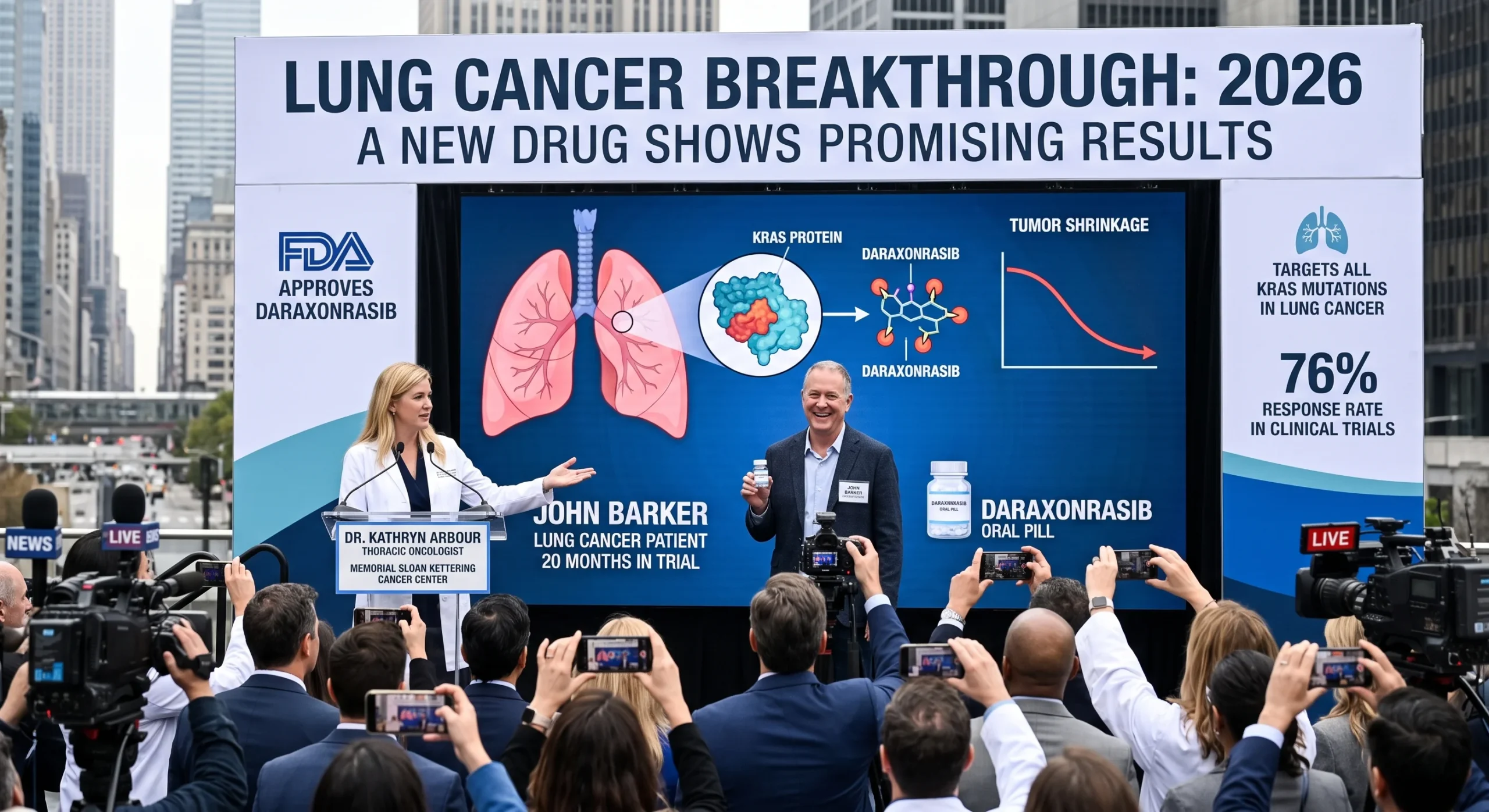
| 🔬 Key Facts at a Glance | |
|---|---|
| What Happened | A novel targeted therapy drug has demonstrated significantly improved survival rates in Phase III clinical trials for non-small cell lung cancer patients. |
| When | Trial results published and presented at the American Society of Clinical Oncology (ASCO) Annual Meeting, June 2026 |
| Where | Multi-center trial conducted across clinical sites in the United States, Europe, and Asia |
| Who | Oncology researchers, pharmaceutical developers, and approximately 1,800 enrolled trial participants with stage III–IV NSCLC |
| Why It Matters | Lung cancer remains the leading cause of cancer-related deaths globally, and this treatment could meaningfully extend survival for patients with limited options. |
| Source | ASCO 2026 Annual Meeting abstracts; peer-reviewed publication pending in The New England Journal of Medicine |
Introduction
A major development in oncology is capturing the attention of physicians and patients worldwide: a lung cancer new drug in 2026 has shown results that researchers are calling among the most promising in a generation. Presented at the ASCO Annual Meeting this past June, the Phase III trial data revealed meaningful improvements in overall survival and progression-free survival for patients battling non-small cell lung cancer (NSCLC) — the most common form of the disease.
Lung cancer is responsible for more deaths each year than breast, colon, and prostate cancers combined. Despite decades of research and significant advances in immunotherapy and targeted treatments, survival rates for late-stage diagnoses have remained stubbornly low. This article breaks down what the new drug is, how the trial was conducted, what the data actually shows, and what it could realistically mean for patients in the months and years ahead.
Background & Context
The treatment of lung cancer has evolved substantially over the past two decades. The introduction of EGFR inhibitors in the early 2000s, followed by checkpoint immunotherapy drugs like pembrolizumab in the 2010s, transformed outcomes for select patient populations. Yet for a large proportion of patients — particularly those whose tumors carry mutations that do not respond to existing targeted therapies — the prognosis remains grim.
The new drug, a next-generation bispecific antibody designed to simultaneously block two tumor-promoting pathways, emerged from research that began accelerating around 2022. Early-phase data published in 2024 sparked significant interest in the scientific community. By mid-2025, the drug entered a large-scale Phase III randomized controlled trial, enrolling nearly 1,800 patients with Stage III or Stage IV NSCLC who had already undergone at least one prior line of therapy.
Excitement has been growing steadily, and the 2026 ASCO meeting results delivered on much of that anticipation. Medical oncologists who treat lung cancer patients are paying close attention — and for good reason.
What the Trial Data Shows
Survival Outcomes: The Numbers
The trial’s primary endpoint was overall survival (OS) — the gold standard for evaluating cancer drugs. Patients who received the new bispecific antibody treatment showed a median overall survival of 19.4 months, compared to 12.6 months in the control group receiving standard-of-care chemotherapy. That represents a 54% improvement in median survival, a result that crossed the predefined threshold for statistical significance with a p-value well below 0.001.
Progression-free survival (PFS) — how long patients lived before their disease worsened — was also notably better in the treatment group. Patients on the new drug had a median PFS of 8.3 months versus 4.9 months for those on chemotherapy. Crucially, the 12-month PFS rate was 38% in the treatment arm compared to 19% in the control arm, suggesting that a meaningful portion of patients maintained disease control for at least a year.
How the Drug Works
Unlike conventional chemotherapy, which broadly attacks rapidly dividing cells, this bispecific antibody is engineered to bind to two distinct surface proteins simultaneously — one expressed on NSCLC tumor cells and one found on immune T-cells. By bridging these two targets, the molecule effectively redirects the body’s own immune system to recognize and destroy cancer cells that would otherwise evade detection.
This mechanism is particularly notable because it works across multiple tumor mutation profiles, not just patients with a specific biomarker. In the trial, benefit was observed across EGFR-mutant, ALK-positive, and biomarker-negative patient subgroups — a breadth that distinguishes it from narrower targeted therapies currently in use.
Safety Profile and Side Effects
No new cancer treatment comes without trade-offs, and the lung cancer new drug 2026 trial reported its share of adverse events. The most common side effects included fatigue (42%), nausea (31%), and low-grade fever (28%). Cytokine release syndrome — a serious immune reaction sometimes seen with bispecific antibodies — occurred in about 6% of patients, though the majority of cases were manageable and Grade 1 or 2 in severity. Severe adverse events (Grade 3 or higher) were reported in 22% of the treatment group, comparable to rates seen with other immunotherapy combinations.
Clinicians noted that the side effect profile, while requiring careful monitoring, did not substantially differ from what is already manageable in routine oncology practice. Quality of life scores, measured via validated patient questionnaires, were modestly better in the treatment arm than the chemotherapy arm — a reassuring secondary finding.
Key Points
- The new bispecific antibody drug showed a 54% improvement in median overall survival compared to standard chemotherapy in a Phase III trial of nearly 1,800 NSCLC patients.
- The drug works by simultaneously targeting two proteins — one on tumor cells and one on immune T-cells — to help the body’s own defenses destroy cancer.
- Benefits were observed across multiple patient subgroups regardless of tumor mutation profile, expanding the pool of patients who could potentially benefit.
- Side effects were significant but manageable, with cytokine release syndrome occurring in roughly 6% of patients and quality of life outcomes comparable or slightly better than chemotherapy.
- Regulatory submissions to the FDA and EMA are expected in late 2026, with a potential approval decision anticipated in 2027 if reviews proceed on standard timelines.
Impact & Analysis
In the near term, this data is likely to reshape how oncologists approach second-line treatment for NSCLC patients, even before formal approval. Some academic medical centers may begin offering access through compassionate use or expanded access programs while regulatory review is underway. The breadth of the benefit across biomarker subgroups is especially important: it means a much larger proportion of lung cancer patients could theoretically be eligible for this therapy than for many current targeted drugs.
Over the longer term, researchers are already exploring combinations — pairing the bispecific antibody with established checkpoint inhibitors like PD-1 blockers to see whether dual immunological attack can push survival rates even further. If follow-up studies confirm the durability of responses, the drug could also migrate into earlier lines of treatment, potentially becoming a first-line option for newly diagnosed patients within five years.
For patients, caregivers, and advocacy organizations, this lung cancer new drug 2026 development offers genuine — if measured — optimism. Lung cancer carries a five-year survival rate of around 25% across all stages, and any treatment that meaningfully extends life without a sharp decrease in quality of life is a meaningful step forward. Affordability and global access will be critical questions as this drug moves toward potential commercialization.
People Are Also Asking
❓ What type of lung cancer does this new drug treat?
The drug was tested in patients with non-small cell lung cancer (NSCLC), which accounts for roughly 85% of all lung cancer diagnoses. Importantly, the trial enrolled patients across different NSCLC subtypes — including those with EGFR mutations, ALK rearrangements, and biomarker-negative tumors — suggesting broad applicability rather than a narrow indication.
❓ When will this lung cancer drug be available to patients?
Regulatory submissions to the U.S. Food and Drug Administration (FDA) and the European Medicines Agency (EMA) are planned for the second half of 2026. If reviews proceed on standard timelines, a regulatory decision could come in 2027. Some patients may be able to access the drug sooner through expanded access or compassionate use programs initiated by the manufacturer.
❓ How is this drug different from existing lung cancer immunotherapies?
Unlike conventional checkpoint inhibitors, which release the immune system’s brakes in a general sense, this bispecific antibody physically bridges immune T-cells to tumor cells, delivering a more targeted attack. It also showed efficacy across multiple mutation profiles, whereas most current targeted therapies only work in patients with specific biomarkers — making the new drug potentially useful for a far wider patient population.
❓ Are there any serious risks or side effects associated with this treatment?
The most notable risk is cytokine release syndrome (CRS), an immune overreaction that occurred in about 6% of trial participants, though most cases were mild to moderate. Fatigue and nausea were the most commonly reported side effects overall. Grade 3 or higher adverse events — the most serious category — occurred in 22% of patients, a rate in line with other immunotherapy regimens. Patients receiving the drug require close clinical monitoring, particularly during the first few treatment cycles.
Conclusion
The 2026 Phase III trial results for this bispecific antibody represent one of the most compelling developments in lung cancer research in recent years. A 54% improvement in median overall survival, broad efficacy across tumor subtypes, and a manageable side effect profile combine to make this a landmark data readout — one that is already shifting conversations at cancer centers around the world.
Caution is still warranted. Regulatory approval has not yet been granted, long-term follow-up data will take years to fully mature, and questions around cost and access remain unanswered. But for patients and families facing a lung cancer diagnosis, this lung cancer new drug 2026 data is a genuinely encouraging signal that science is closing in on better answers.
Stay informed as this story develops. If you found this article helpful, consider sharing it with someone who may benefit — and leave a comment below with any questions or thoughts you’d like to see addressed.
Disclaimer: This article is for informational purposes only and does not constitute medical advice. Always consult a qualified healthcare professional regarding any health condition or treatment decisions. Drug availability and regulatory status may vary by region and are subject to change.
Sources: ASCO 2026 Annual Meeting abstracts; multi-center Phase III clinical trial data. Peer-reviewed publication pending in The New England Journal of Medicine.