| Label | Value |
|---|---|
| What Happened | Ukraine and Russia peace talks set to resume in September 2026 with US envoys leading mediation efforts |
| When | September 2026 (following August 27, 2026 announcement by Ukraine’s top negotiator) |
| Where | Venue to be confirmed; previous rounds held in Abu Dhabi, Geneva, and Florida |
| Who | Putin, Zelensky, US envoys Steve Witkoff & Jared Kushner, Ukraine’s Kyrylo Budanov & Rustem Umerov |
| Why It Matters | A September resumption could represent the best chance yet to end Europe’s bloodiest conflict since World War II |
| Source | Reuters, Interfax-Ukraine, Bloomberg, Associated Press |
Introduction
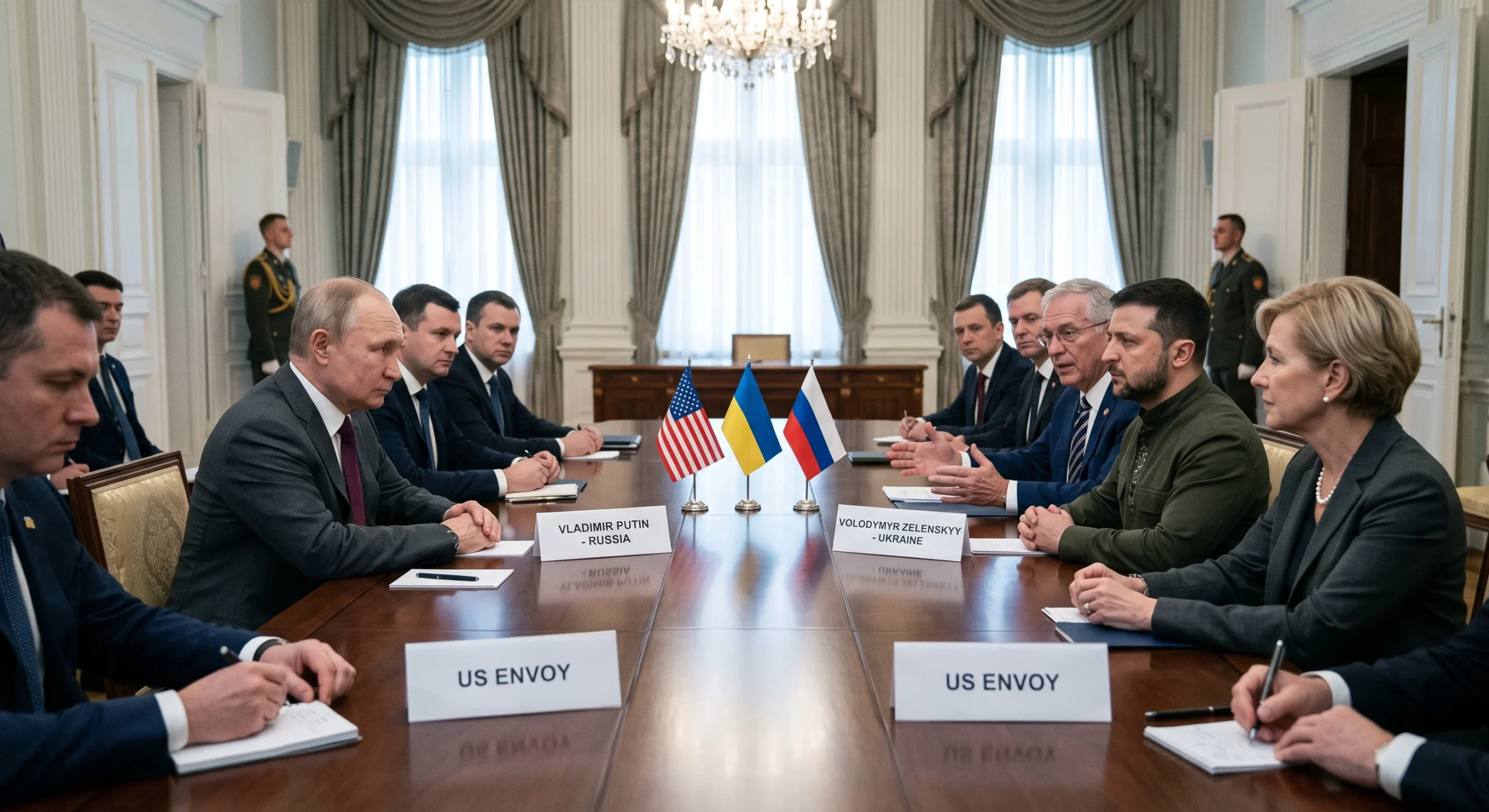
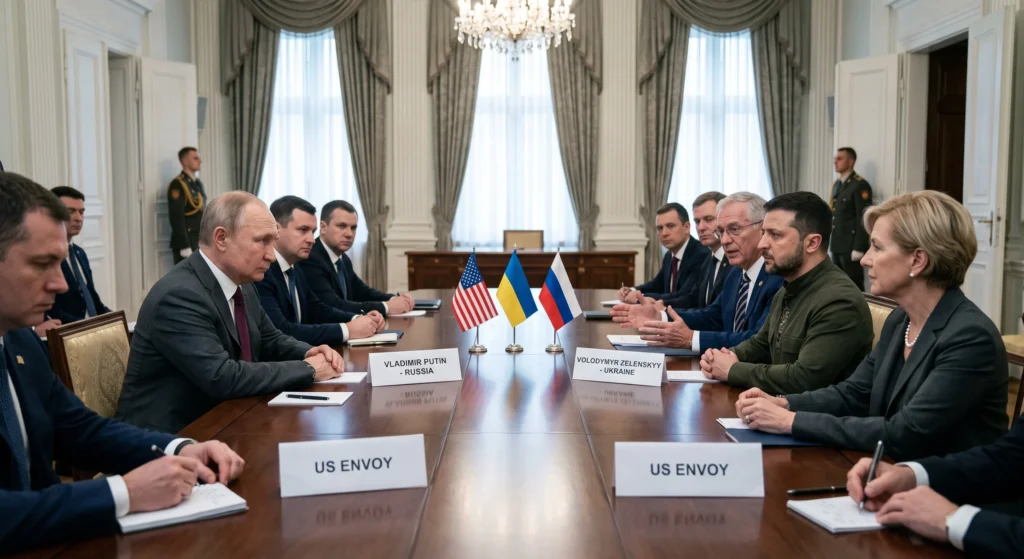
The Ukraine Russia peace talks September 2026 are shaping up to be one of the most consequential diplomatic events of the year. After months of stalled negotiations — largely caused by Washington’s military focus on the Iran conflict — all signs now point to a fresh round of face-to-face discussions between Ukrainian and Russian teams before autumn. Ukraine’s top presidential aide, Kyrylo Budanov, confirmed on August 27 that talks could take place in September and would include US representatives, offering a rare burst of optimism in a conflict that has stretched into its fifth year. With US envoys Steve Witkoff and Jared Kushner driving the mediation effort and President Trump declaring a deal is “reasonably close,” the world is watching whether September 2026 will finally bring a breakthrough — or another frustrating near-miss.
Background and Context
Russia’s full-scale invasion of Ukraine began in February 2022, setting off the most destructive war on European soil since World War II. By 2025, Russia had been advancing at a rate of roughly 12 to 17 square kilometers of Ukrainian territory per day, applying enormous pressure on Kyiv. The Trump administration stepped in as the primary US-backed mediator, dispatching Witkoff and Kushner to shuttle between Moscow, Kyiv, and various neutral venues. Three formal rounds of talks took place between January and February 2026 — first in Abu Dhabi twice, then in Geneva — but negotiations stalled when Washington pivoted its attention toward the conflict with Iran. Both sides maintained what Budanov described as “maximalist” positions during that period. By July 2026, Zelensky was publicly calling for renewed talks before fall, and by late August, momentum had begun to rebuild. Witkoff’s assessment that the parties had made more progress in recent weeks than in the prior three to four years combined set expectations high for a September resumption.
The Road to September: What’s Changed
From Geneva to a Summer Pause
The third round of US-brokered talks took place in Geneva in mid-February 2026. Both Moscow and Kyiv sent delegations, with US officials describing the sessions as difficult but meaningful. However, the talks were soon frozen as the United States redirected diplomatic and military resources toward its direct confrontation with Iran. Ukraine’s negotiating team — led by Budanov and Defense Council Secretary Rustem Umerov — maintained contact with American counterparts through secure channels, but no new formal sessions were scheduled for months. During this pause, Ukraine continued striking Russian oil infrastructure and military logistics, actions that Budanov explicitly said were intended to improve Kyiv’s leverage at the table. Meanwhile, Russia’s financial burden mounted, with war expenditures reportedly running into the trillions of rubles — a pressure point Budanov cited as giving Moscow a genuine incentive to settle.
The Envoys Return: Witkoff and Kushner’s Diplomatic Push
US special envoy Steve Witkoff and senior advisor Jared Kushner have been the twin engines of the Trump administration’s peace effort. From early rounds in Florida and Moscow to meetings in Berlin and Davos, the pair logged enormous diplomatic mileage. In late January 2026, Witkoff told Bloomberg that the parties had essentially resolved roughly 90 percent of outstanding issues, echoing Ukraine’s own negotiators. He described a situation where, after the Geneva talks, progress accelerated sharply — more movement in six to seven weeks than in years of prior diplomacy. Kushner’s involvement brought additional weight, reflecting how seriously the White House was treating the file. By mid-2026, both had met with Ukraine’s new presidential office head Budanov — formerly the country’s military intelligence chief — and came away expressing confidence that a deal framework was within reach, pending resolution of the remaining core sticking point.
Ukraine’s Position and Zelensky’s Calculus
Zelensky has consistently insisted that any peace deal must not reward Russian aggression or permanently cede Ukrainian territory. His call for a direct meeting with Putin has gone unanswered — Russia’s Foreign Minister Sergei Lavrov argued the two sides remain too far apart for a leaders’ summit. Instead, Zelensky has worked through his negotiating team while simultaneously preparing Ukrainian public opinion: in February 2026, Ukraine announced plans to hold a presidential election alongside a national referendum on any potential peace agreement, ensuring voters would have a direct say. Ukraine also secured a €90 billion support package from the European Union for 2026–27, giving Kyiv a degree of financial stability that reduces the desperation to accept unfavorable terms. Still, Zelensky has repeatedly urged talks to restart, making clear he sees diplomacy — not continued attrition — as the path forward.
🔑 Key Points at a Glance
- Ukraine’s presidential chief of staff Kyrylo Budanov confirmed on August 27, 2026, that talks with Russia — including US participation — could resume in September.
- US envoys Steve Witkoff and Jared Kushner have led the mediation effort since late 2025, meeting both Russian and Ukrainian delegations across multiple countries.
- Three formal rounds of US-brokered talks occurred between January and February 2026 before the process stalled due to Washington’s conflict with Iran.
- Witkoff stated the two sides had resolved roughly 90 percent of outstanding issues, with significant progress made in the weeks since Geneva.
- Both sides retain “maximalist” positions on territory, but Russia’s mounting war costs and Ukraine’s military strikes on Russian infrastructure have shifted negotiating pressure.
Impact and Analysis
A September resumption of the Ukraine Russia peace talks carries enormous implications for the region and the world. In the short term, even the announcement of a new negotiating round tends to suppress energy market volatility and ease pressure on European defense budgets. For Ukraine, renewed talks provide an opportunity to lock in gains from its summer military strikes before winter degrades frontline conditions. For Russia, whose wartime expenditures have climbed into the trillions, any credible peace framework offers relief from economic pressure. Longer term, a successful agreement would reshape European security architecture — the question of whether and how Ukraine receives international guarantees against future Russian aggression remains the single most contentious unresolved item, according to diplomats on all sides. European powers, who have been building a “coalition of the willing” to backstop any deal, are watching September closely. A failure to reach agreement, conversely, risks pushing the conflict into a sixth year with no clear end in sight.
People Are Also Asking
Conclusion
The prospect of resumed Ukraine Russia peace talks in September 2026 represents a genuine, if fragile, window of opportunity. After months of stalemate caused by Washington’s focus elsewhere, US envoys Witkoff and Kushner have rebuilt momentum, and Ukraine’s negotiating team is cautiously signaling readiness to engage. The fundamentals have shifted: Russia’s wartime costs are unsustainable, Ukraine’s military pressure has been effective, and both sides reportedly understand the broad limits of a possible compromise. Whether those conditions translate into a signed framework or another temporary pause remains to be seen. What is certain is that the world will be paying very close attention to whatever happens — or does not happen — at the negotiating table this autumn. Share this article with someone who wants to understand what is really at stake, and leave your thoughts in the comments below.
Disclaimer: This article is for informational purposes only. It does not constitute political, legal, or financial advice.
Sources: Reuters, Interfax-Ukraine, Bloomberg, Associated Press, Fox News, PBS NewsHour, Anadolu Agency, Ukrainian News Agency. All information is based on publicly available reporting as of September 6, 2026.